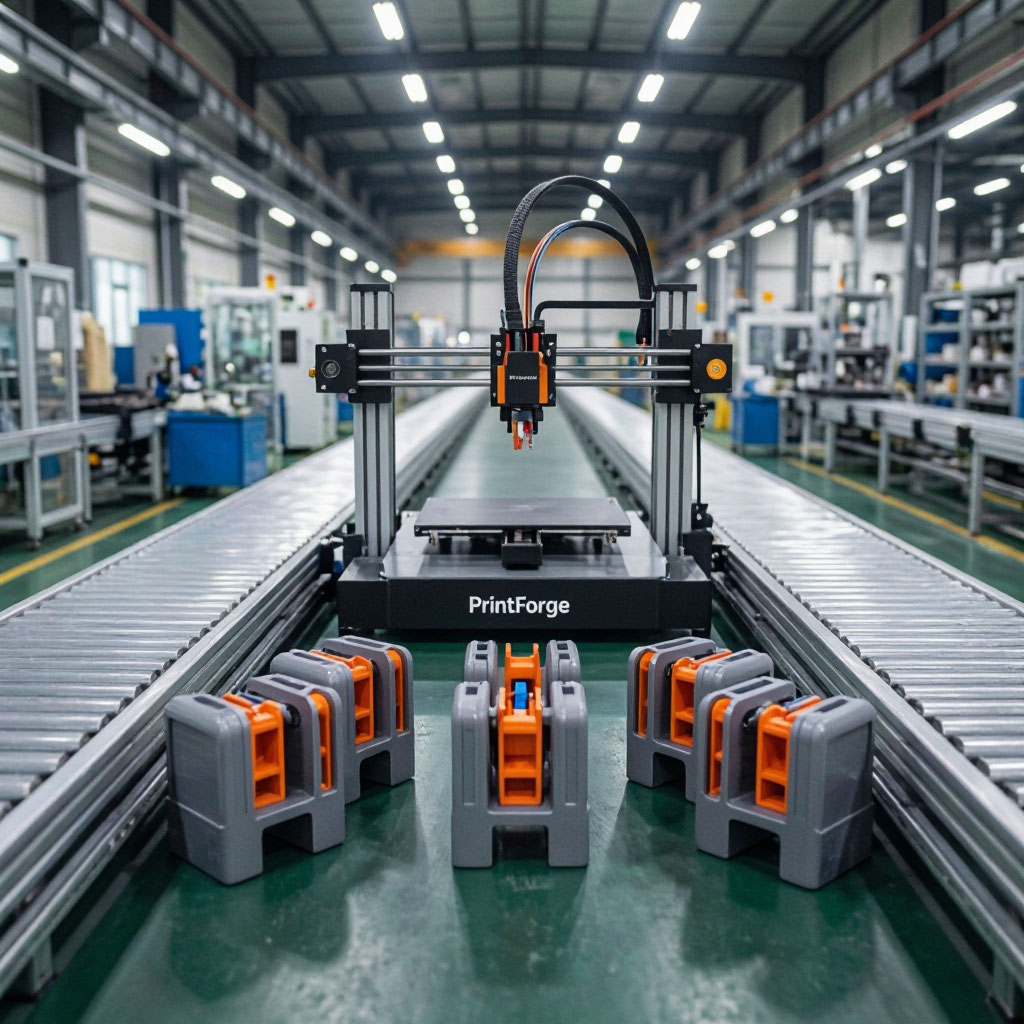
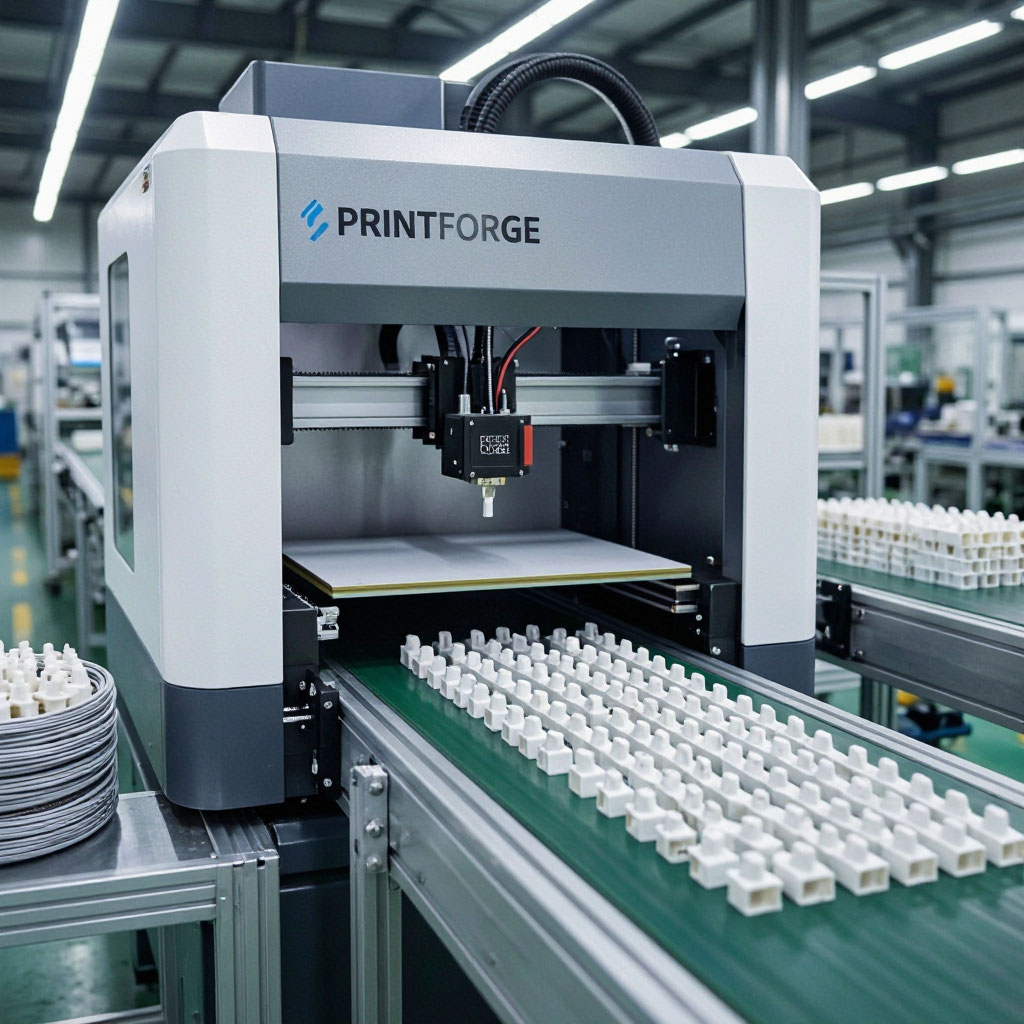
Cabin panel brackets for regional jet retrofit
120 flame-retardant PEI brackets for a 15-year-old regional jet interior refresh. Full lot traceability and smoke-test documentation shipped with each batch.
Every case study below is a real customer project with real numbers. We have included the ones that went well and the ones that had problems, because a shop that only shows you the success stories is not telling you the truth.
Full breakdown of the featured project, from the initial phone call to the field-service outcome three months later.
Cascade Logistics runs 340 Ford Transit delivery vans. The OEM under-hood cable clip that holds the wiring harness against the chassis had a documented failure mode: the stamped steel clip rusts in coastal humidity and eventually snaps. When it fails, the harness swings loose and rubs against the intake manifold. Cascade had seen 47 failures in 18 months across the fleet, each costing roughly $420 in labor and tow.
The OEM replacement was a superseded part with the same design. Cascade needed something that would not rust.
We scanned the failed clip, modeled a replacement in PA12 with 15% carbon fiber reinforcement, and tested it against three criteria: continuous operation at 120 °C, resistance to road salt spray, and 50 N pull force without cracking.
The first prototype survived all three. Second prototype added a rib on the back face after the first one showed slight flex under sustained load. Third prototype passed a 500-hour accelerated corrosion test with zero surface degradation.
4,000 clips produced over two batches, delivered to Cascade's Sacramento depot in 17 calendar days. Installed across the full fleet by Cascade's own technicians over the following month.
Three months later, Cascade reported zero field failures on the printed clips versus an expected 12–15 failures in the same period for the OEM version. They have since placed a standing order for 200 replacement clips per quarter as insurance stock.
“We were looking at a $19,000 annual line item just to keep replacing a $4 steel clip. PrintForge solved it for less than the cost of one month of failed replacements. The clips have been in service for three months and I have not heard a single complaint from the drivers.”
Short-format write-ups of real jobs. Use the industry filter above to narrow it down. Click any card for the full story.
120 flame-retardant PEI brackets for a 15-year-old regional jet interior refresh. Full lot traceability and smoke-test documentation shipped with each batch.
48 drill guides for a maxillofacial surgery pilot. Biocompatible resin, autoclave-compatible, individually bagged and shipped in five days.
12,000 TPU 95A jaws for a food-packaging robot. Validated at 200,000 cycles on a sample before the production run started.
200 units of a fitness band in five colorways. Sanded, color-matched, and individually packaged for a founder's pre-order launch.
Reverse-engineered a guard for a 20-year-old packaging line. Scanned, remodeled, and printed in 48 hours so the machine could restart.
2,400 standoffs for a prototype battery module. Rated to 130 °C continuous, dielectric tested to 3 kV, shipped in two weeks.
180 cable routing guides for a maintenance hangar. Custom geometry that replaced a three-part assembly with a single printed unit.
Single-unit PEI insert for an autoclave tray. Survived 60 sterilization cycles at 134 °C without warping or discoloration.
500 pre-order units of a wall-mount hub enclosure. Sanded, painted matte white, with threaded inserts pre-installed.
Custom fixture that reduced board misalignment rate from 4.1% to 0.3% on a high-volume SMT line.
600 brackets for an autonomous guided vehicle retrofit. Vibration tested to 10 g RMS across a 4-hour profile.
No case studies in this industry yet. Try another filter or ask us directly about projects in your sector.
Numbers pulled from all 24 case studies on record. Real outcomes, not aspirational marketing.
Five lessons that keep showing up in the case library, regardless of industry or scale.
Choosing between PETG and PA12 matters less than orienting the part correctly. In seven case studies, we solved a strength problem by rotating the part on the build plate, not by switching to a stiffer material.
Out of 24 projects, only three shipped the very first print as the final part. The other 21 went through at least one design revision, and two went through four. That is normal and it is built into our process.
Five projects that started in ABS had to be redone after the part sat in sunlight or under a hood for a few weeks. If your part sees direct sun or engine bay heat, tell us upfront and skip the round trip.
In four case studies, a customer was ready to buy a CNC-machined part until they saw the price at 500 units with our volume discount applied. The break-even point for switching from machining to printing is almost always between 30 and 60 units.
Every customer who hired us to reverse-engineer a legacy part came back for more within a year. The math is simple: a $180 scan-and-model job can restart a machine that costs $800 an hour to keep offline.
“We tried two other print shops before PrintForge. The first missed tolerance, the second ghosted us for a week. PrintForge answered the phone, sent daily updates, and shipped two days early.”
“They flagged a printability issue on our file before we paid anything. Turned out the internal wall was too thin for the load we had spec'd. Saved us from a failed print and a redesign.”
“Honest about the limits. We asked for a part that would work in a sauna environment, and they told us straight up that no filament we stock would hold up long-term. Saved us from a warranty disaster.”
Sometimes, with their permission. Several of the customers featured here have agreed to take reference calls with prospective clients in the same industry. Ask us during your initial quote and we will check with the specific customer you are interested in.
Most of our customers work under NDAs with their own clients, and some run competitive product lines. We never publish a customer's name, product, or geometry without written permission. The numbers and outcomes are always real, just the identifying details are masked unless the customer approves otherwise.
We publish projects where the customer walked away with a working part, even if the first attempt did not work. We do not publish projects where we could not solve the problem, because those are usually a mismatch between the application and the technology. If your project is in that category, we will tell you upfront rather than accepting an order we cannot deliver on.
We ask the customer to report back at 30, 60, and 90 days after deployment. Some give us hard numbers, some give us estimates. Where we quote a specific number like “zero field failures,” that comes from a customer's maintenance log, not our own estimate.
Yes, if you agree. We ask every customer at the end of a project whether they want to be featured anonymously. Most say yes because it helps other engineers in their field. You can decline and it does not affect your pricing or service in any way.
We cover aerospace, medical, automotive, consumer, robotics, and industrial here. For other sectors, contact us directly and we will tell you honestly whether we have relevant experience or whether a different shop would serve you better. Details on our industry focus are in the Industries section.
Send us the drawing and the constraint that is driving the project. We will tell you honestly whether we can solve it and what it will cost.
Send us the file, the constraint, and the deadline. We will tell you the truth about what is possible.