FDM Print Technician
Run the FDM bay day-to-day. Prep spools, monitor prints, remove supports, hand off parts to inspection. This is the role that touches every single customer order that leaves the shop.
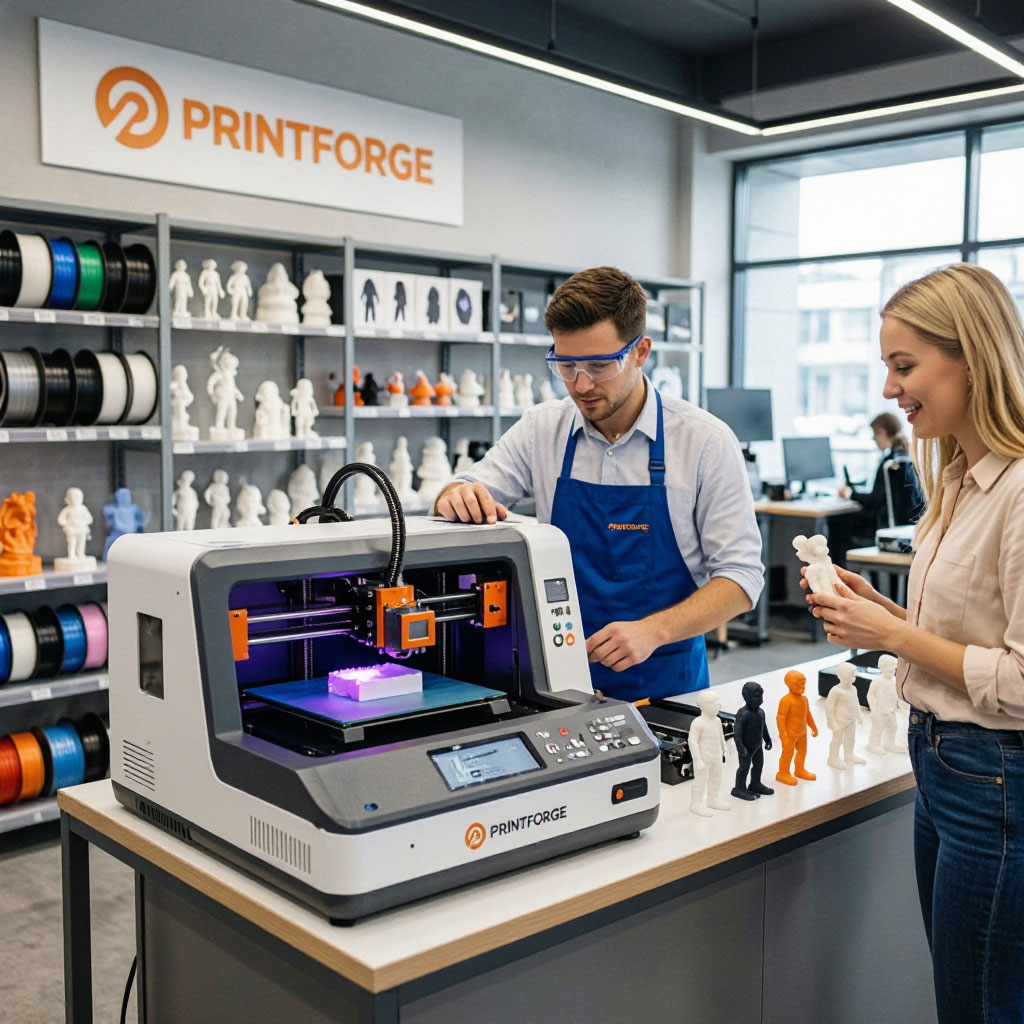
We are eighteen people running forty-two printers in a Market Street shop. No open-plan chaos, no corporate ladder, no fifty-page handbook. Just skilled people making real parts for real customers, and getting paid fairly to do it.
No "we work hard, play hard" nonsense. These are the concrete reasons people stay, and the ones the job descriptions do not usually tell you.
Every role has a posted range. We do not negotiate around your previous salary and we do not lowball candidates who do not push back.
Forty hours a week means forty hours. The shop is closed on weekends except Saturday morning for customer pickups, which is covered by a rotating volunteer schedule.
If a job runs late because of a customer emergency, you get paid for the extra hours or you take them as flex time. Your choice.
Medical, dental, and vision coverage starts on your first day, not after a ninety-day probation. Dependents covered at 75%.
Every employee gets $200 per year in personal printing credits plus access to the shop on Sunday afternoons for personal projects.
Four of our current team members started in entry-level positions and moved into specialized roles. Priya, our lead slicing engineer, started as a shipping coordinator in 2022.
Every Friday at 4 pm, the whole team sits down for a thirty-minute wrap-up. Anyone can raise anything — tooling purchases, process changes, customer feedback, or a complaint about the coffee. Decisions get made in that room, not in a management meeting you are not invited to.
Filter by department to see what fits. Applications are reviewed by the team lead for the role, not by a recruiter.
Run the FDM bay day-to-day. Prep spools, monitor prints, remove supports, hand off parts to inspection. This is the role that touches every single customer order that leaves the shop.
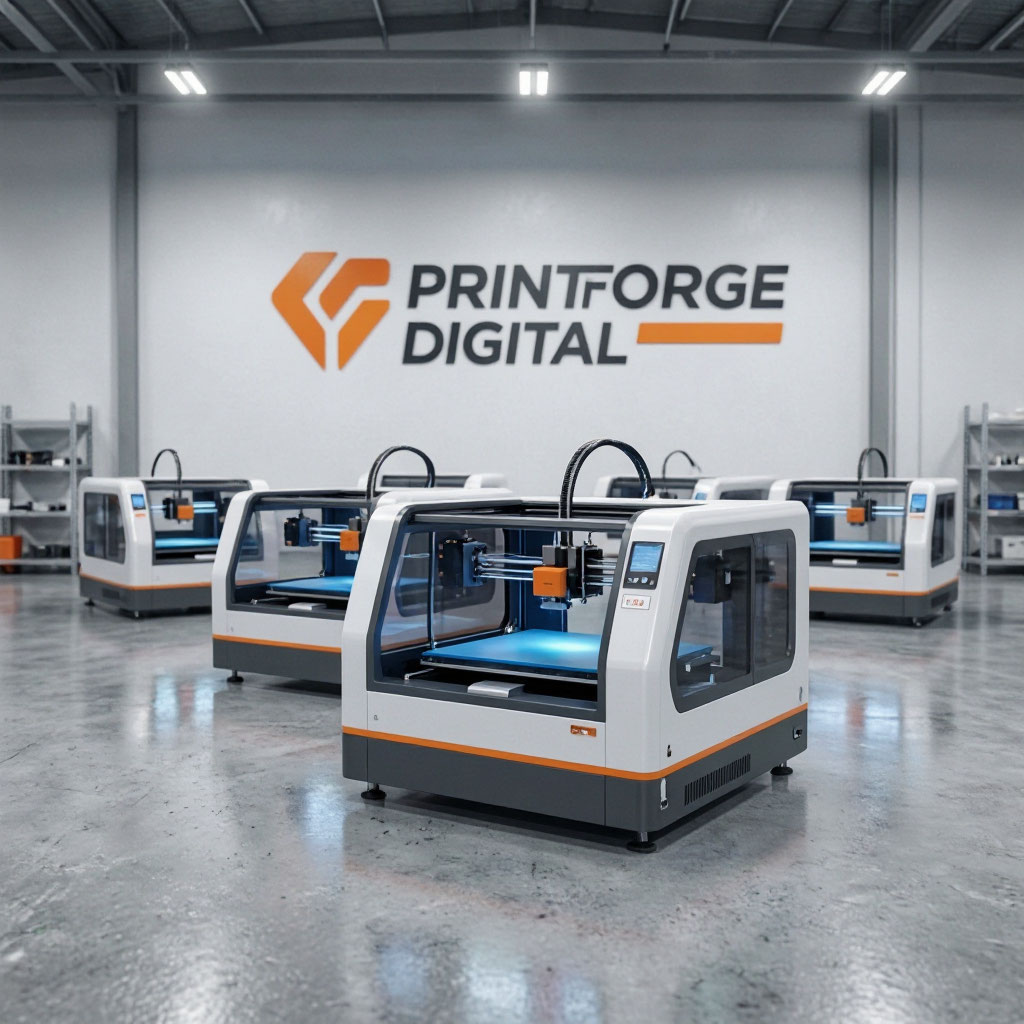
Talk to customers about their parts, review files for printability, and recommend materials and processes. Half engineering, half customer conversation. You will own the first technical impression every new customer gets.
Own the dock. Pack parts, print labels, schedule couriers, receive incoming materials, and keep the log accurate. Small role on paper, huge role on the customer's end — a badly packed box ruins a good part.
Twelve-month paid apprenticeship for people transitioning into additive manufacturing from adjacent fields. Rotates through production, inspection, and finishing. Two slots per year. No formal degree required — we care about whether you can learn, not what you studied.
No open roles in this department right now. Send a resume to [email protected] and we will keep it on file for future openings.
Full-time employees in good standing. Apprentices get a reduced package that is listed on the apprenticeship section below.
Medical, dental, and vision from day one. Shop pays 90% of the employee premium and 75% of dependent coverage.
Traditional and Roth 401(k) with a 4% shop match. Vested immediately — no waiting three years to keep the money.
Fifteen days PTO plus ten paid holidays in year one. Six weeks paid parental leave for either parent.
$1,200 per year for courses, conferences, or certifications related to your role. No pre-approval hoops for anything under $300.
$200 per year in personal printing credits, plus Sunday afternoon shop access for personal projects.
Pre-tax Clipper Card and pre-tax parking. We also cover a monthly Muni pass for anyone who commutes by transit.
Fully stocked kitchen, good espresso machine, and lunch provided on Fridays. Small thing, but people notice.
If you need a specific tool to do your job better, ask. We have said yes to roughly 90% of tool requests in the last two years.
The whole process from first contact to offer takes about two weeks. Every applicant gets a response, even the ones we do not move forward with.
Email your resume and a short note to [email protected]. The team lead for the role reviews it, not a recruiter. Every applicant hears back within three business days with either a yes, a no, or a question.
Thirty minutes on the phone with the team lead. We talk about your background, why this role, what you want from the next few years. You ask us anything — pay, schedule, weird smells in the shop, whatever you want to know.
Four hours in the shop doing a real task related to the role. You get paid for the time. We get to see how you approach an unfamiliar problem. No whiteboard tests, no trick questions — just real work.
We make a decision within four business days of the practical. Offers include the exact pay, the benefits package in writing, and the start date. If we go with someone else, you get a real explanation, not a form letter.
The shop is loud in the morning and quiet in the afternoon. Parts smell faintly of hot plastic all day. Here is what a typical Tuesday looks like for the production team.
First person in reviews the overnight build log. Three printers ran unattended. Two finished clean, one had a filament tangle on the spool — stopped it, logged it, reprinted on the next machine.
Load the day's jobs from the slicing queue. Twelve FDM jobs today. Spools checked for moisture, bed leveled, first layers verified on every machine before we walk away.
Support removal, sanding, IPA wipe-down. Some parts get photographed for the customer. Everything is inspected against the drawing before it goes to packing.
Kitchen is stocked. Usually a group of us eats together. Topic of the day varies wildly — printer maintenance, football, someone's new 3D printing side project.
Swap finished plates, load the next batch. Mid-afternoon check on the SLS bay. Talk to the application engineer about a customer part that came in wrong — we flag it, customer gets a call, project stays on track.
Thirty minutes with the whole crew on Fridays, quick standup on other days. Anyone can bring anything up. This week's topic: whether we should upgrade to the newer Bambu nozzles.
Machines left running overnight are logged, bay lights off, front door locked. Most days people leave within ten minutes of the clock, not stay late.
Two paid apprenticeships every year for people who want to move into additive manufacturing but did not come from a traditional engineering path. No degree required. No prior 3D printing experience required.
Learn the shop from the dock inward. Packing, labeling, receiving materials, keeping inventory accurate. You will touch every product that leaves the building.
Run the FDM and SLA bays. Learn to spot a bad first layer, tune a printer, and diagnose the twenty most common print failures before they waste material.
Work alongside our quality lead. Learn calipers, the CMM stations, and the four inspection gates every part passes through before it ships.
Pick a specialization — post-processing, CAD support, or slicing. Spend the last quarter getting genuinely good at one thing instead of passable at everything.
Unedited quotes from current team members, collected anonymously in a 2025 review survey.
The thing that surprised me is how much ownership you actually get. On my third week I was already making real decisions about print settings that shipped to customers. Nobody micromanaged me into a corner.
I came from a job where I was on my feet for twelve-hour shifts with no breaks. The eight-hour day here is genuinely eight hours. I get to see my kid on weekday evenings now. That is worth more than any raise.
Maya and Adrian actually listen. When we said the old scheduling system was broken, they scrapped it and rebuilt it based on our suggestions. That never happened at any job I had before.
I started as a shipping coordinator. Two years later I am running the slicing queue for every FDM and SLS job that comes through. They saw I was interested and gave me the training instead of hiring outside.
The pay band was posted before I applied and the offer matched it exactly. No haggling, no "we will see what we can do." That level of transparency is not normal in this industry and it is why I took the job.
The work is physical and there are days when everything breaks at once. But the team is small enough that everyone knows your name and nobody is pretending to be more important than anyone else.
A job posting that only lists positives is a job posting you cannot trust. Here are the real downsides of working in this shop.
Forty-two printers running at once produce constant mechanical noise. We provide hearing protection and enforce breaks, but if you need a quiet office to concentrate, this is not the right environment.
Standing for most of the day, lifting spools up to 20 pounds, bending under machines to clear jams. It is not an office job and it is not pretending to be one.
Whatever failed over the weekend — a print, a job, a customer email — you walk into it first thing Monday. We try to structure it well, but the first two hours of Monday are always busy.
Engineers get hybrid schedules. Production, shipping, and finishing roles are fully on-site. If working from home is essential to you, only the application engineer role fits.
Printing well is a skilled trade, not a task you master in two weeks. Expect six months before you feel genuinely confident and a year before you are as good as the people training you.
No. Two of our current team members do not have a college degree, including one who runs an entire production bay. What matters is whether you can learn a physical skill and stick with it past the boring parts. The application engineer role does benefit from a mechanical engineering background, but we have hired strong candidates without one.
The full range is posted on every job listing above. Offers land in the middle-to-upper end of the range for candidates who meet the experience bar, and at the lower end for candidates who are strong on potential but light on track record. We do not pay below the posted range for any reason.
We do not currently sponsor work visas. All roles require authorization to work in the United States without sponsorship. This is a limitation of a small shop, not a policy choice.
Occasionally. Two current employees work 30-hour weeks by arrangement. If you are interested in part-time, mention it in your application and we will tell you honestly whether it is possible for the specific role.
Within three business days, always. If you have not heard back in four days, email [email protected] and we will check on it. We do not ghost applicants.
Send your resume anyway to [email protected]. We keep a file of strong candidates and reach out first when a new role opens. Three of our current employees were hired this way.
If you are curious but not sure, book a shop tour. Thirty minutes, no obligation, and it is a much better way to decide than reading a job listing.
Send a resume, book a tour, or just email us with a question. We answer every one.